Cornwall, Educational
The Maidens of Polperro & Saints’ Well: Secrets of the Lucky Charms
The Legend of Joan the Wad: How the Maidens of Polperro Blessed Their Charms at Saints Well
Nestled along the rugged Southwest Coast Path of Cornwall, the picturesque fishing village of Polperro holds a history steeped in maritime tradition, smuggling lore, and enchanting Cornish folklore. Among its most curious and captivating traditions is the story of Joan the Wad, the legendary Queen of the Cornish Piskies and the sacred ritual performed by local village maidens at the ancient Saints Well to drive away ill fortune and command good luck.
Who is Joan the Wad?
In Cornish folklore, Joan the Wad is revered as the Queen of the Piskies (or Pixies), a mysterious race of small magical folk said to inhabit the hidden valleys, moors, and coastal glens of Cornwall.
“Jack-the-lantern, Joan-the-wad,
That tickled the maid and made her mad,
Light me home, the weather’s bad.”
While closely associated with Jack o’ the Lantern and the atmospheric will-o’-the-wisps that wander lonely landscapes, Joan the Wad carries a distinctly benevolent dual identity. The word “wad” in eastern Cornish dialect refers to a glowing torch or bundle of straw. Legend holds that Joan uses her burning torch to illuminate dark paths, guiding traveller’s away from dangerous cliff edges and leading believers toward wealth, health, happiness, and prosperity.
An old Cornish adage sums up the belief:
“Good fortune will nod, if you carry upon you Joan the Wad.”
The 1930 Pilgrimage: Maidens at Saints’ Well
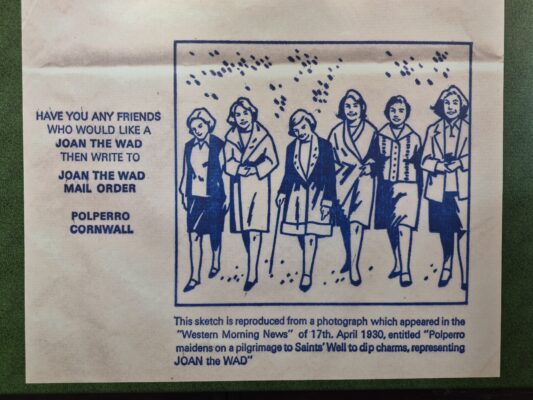
On April 17th, 1930, the Western Morning News published a striking photograph that captured a timeless Cornish ritual. Titled “TO DRIVE AWAY ILL LUCK,” the image documented a group of young Polperro maidens making a solemn pilgrimage to the Saints’ Well.
The Ritual of “Dipping the Charms”
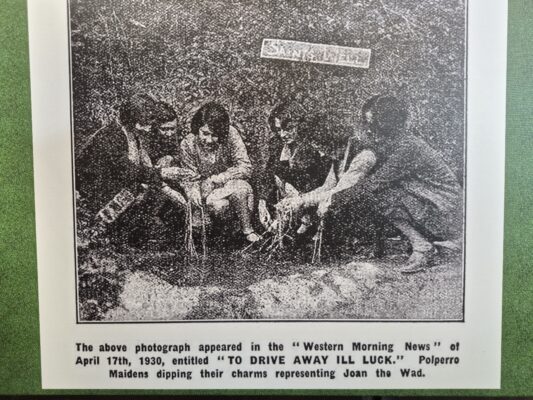
To activate the protective powers of their Joan the Wad charms, local maidens would gather at the sacred spring water of Saints’ Well. Kneeling closely around the natural stone aperture, the young women submerged their small brass and metal pisky charms directly into the blessed water.
According to centuries-old Cornish well-worshipping customs, the combination of:
- Sacred Spring Water (representing purity and ancient spiritual strength)
- The Glowing Torch Spirit of Joan (representing light, warmth, and luck) was believed to cleanse the owner of bad fortune (“ill luck”) and charge the talisman with unyielding good fortune.
Polperro’s Cottage Industry & Mail Order Phenomenon
During the early-to-mid 20th century, thousands of these miniature Joan the Wad charms were produced in Polperro. The tiny charms often depicting Joan as a small brass figure holding her burning torch or accompanied by horseshoes and lucky symbols became a nationwide and international sensation.
Sold through the famous Joan the Wad Mail Order house on Lansallos Street in Polperro, these pocket-sized talismans were posted across the UK, Europe, and North America. Soldiers during World War II carried Joan the Wad charms into battle as protective amulets, while miners, fishermen, and young brides kept them in purses, pockets, or hung them on door knockers to guard their homes against harm.
Visiting the Original Pisky Place & Wishing Well Today
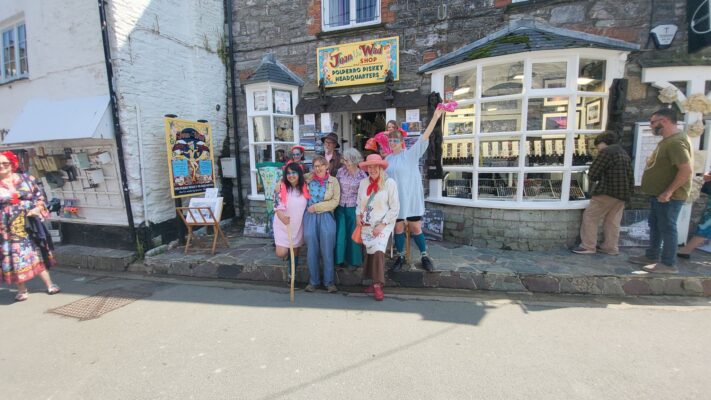
The magic of Joan the Wad lives on in Polperro. Visitors wandering down the narrow, lanes of Lansallos Street can still visit “The Original Pisky Place & Lucky Wishing Well” a historic shrine and shop where the legacy of Cornish piskies is carefully preserved.
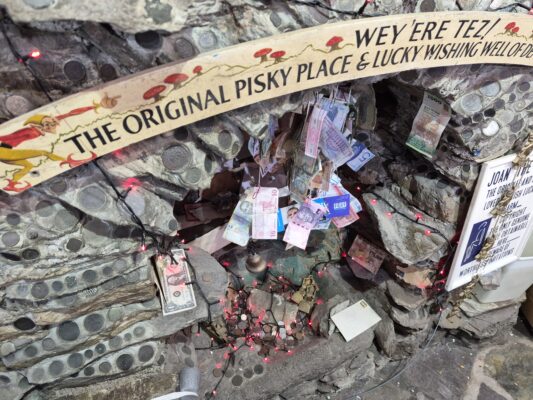
Underneath the Cornish greeting banner—“WEY ‘ERE TEZ! THE ORIGINAL PISKY PLACE & LUCKY WISHING WELL OF DESIRES” stands a stone-grotto wishing well embedded with hundreds of vintage coins, bank notes from across the world, left by modern-day pilgrims seeking a touch of Lady Luck.
How to Experience the Magic Yourself
If you’re visiting Polperro or exploring Cornish folklore, here is how you can step into history:
- Explore Lansallos Street: Stop by the historic Joan the Wad Shop in Polperro, home to original lucky pisky charms, keyrings, and historical memorabilia.
- Make a Wish: Visit the internal grotto wishing well inside the shop to toss in a coin or pin a heartfelt desire.
- Carry Your Own Pisky: Keeping a Joan the Wad talisman in your purse or pocket continues an almost century-old tradition of inviting good luck into your life.
Frequently Asked Questions (FAQ)
Q: What is the difference between a Pixie and a Pisky in Cornwall?
A: “Pisky” is the traditional Cornish dialect spelling for Pixie. In local tradition, Piskies are cheerful, slightly mischievous, but fundamentally helpful earth-spirits.
Q: Where was the original Saints’ Well located?
A: Holy wells and saints’ wells are common throughout the Cornish landscape. Historically, Polperro’s Saints’ Well provided fresh spring water, and dipping charms or pins into the spring was a traditional form of folk magic to seek healing or luck.
Q: Are Joan the Wad charms still made today?
A: Yes! Authentic Joan the Wad charms and registered Cornish Pisky talismans are still sold directly from Polperro and shipped worldwide to folk-magic enthusiasts, collectors, and believers alike.