


Cornwall
A Guide To Joan The Wad and the Polperro Piskies
The Magic of the Piskies: A Guide to Joan the Wad and the Polperro Piskies
In the craggy cliffs and emerald moors of Cornwall, the line between our world and the spirit realm has always been thin. If you’ve ever lost your keys only to find them in a “logical” place you’ve already checked twice, or felt a sudden burst of luck after a streak of misfortune, you’ve likely encountered the Cornish Piskies.
Among these legendary beings, two names stand above the rest: Joan the Wad and the Polperro Piskies. For centuries, these figures have been more than just folklore; they are symbols of Cornish identity and ancient good fortune.
Who is Joan the Wad?
Joan the Wad is famously known as the Queen of the Piskies. Unlike the more mischievous spirits of the moor, Joan is a benevolent figure associated with light and guidance.
The “Wad” in her name refers to a bundle of straw or a torch. In the days before electricity, travelers crossing the treacherous Cornish moors feared the “Will-o’-the-Wisp” (Jack o’ the Lantern), who would lead them into bogs. Joan the Wad, however, used her light to lead the lost back to safety.
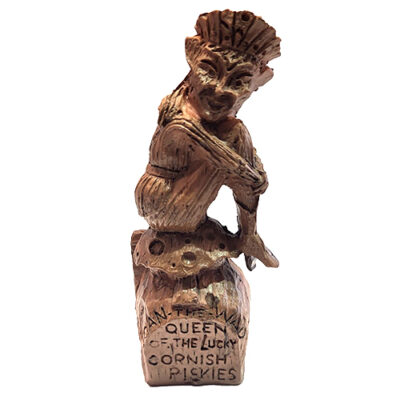
The Famous Joan the Wad Rhyme
To keep her favor, locals would often recite:
Good fortune will nod, if you have Joan the Wad;
She over the Piskies has the control,
To guide you out of the bog and the hole.
The Polperro Connection: A Hub of Pisky Lore
While piskies are found all over Cornwall, the picturesque fishing village of Polperro became the epicenter of Pisky commerce and culture in the 19th and 20th centuries.
Fishermen in Polperro were deeply superstitious. They believed that carrying a Pisky charm – often made of silver or brass – would:
-
Prevent “Pisky-Leading”: Getting confused and lost in familiar places.
-
Ensure a Bountiful Catch: Calming the seas and driving fish into the nets.
-
Protect the Hearth: Warding off ill-fortune from the home.
The Polperro Pisky Shop became a legendary landmark, distributing thousands of charms to soldiers during the World Wars who sought the protection of the “Little People” while far from home.
Piskies vs. Fairies: What’s the Difference?
It is a common mistake to call a Pisky a “fairy.” In Cornish tradition, they are distinct:
| Feature | Cornish Piskies | Traditional Fairies |
| Appearance | Wizened, often red-haired, wearing earthy greens. | Ethereal, often winged, brightly colored. |
| Temperament | Playful, hardworking, but easily offended. | Often aloof or aristocratic. |
| Habitat | Ancient stone circles, mines, and fern-thick valleys. | Flower gardens and woodlands. |
How to Attract Pisky Luck Today
You don’t have to be a 19th-century tin miner to enjoy the blessings of Joan the Wad. Here are a few ways to honor the tradition:
-
Respect the “Fairy Rings”: If you see a circle of darker grass or mushrooms, do not step inside. It is a sacred dance floor for the piskies.
-
A “Nugget” of Kindness: Leaving a small piece of cake or a drop of milk on your doorstep is said to ensure your chores get done a little faster the next day.
-
Carry the Charm: Many still wear Joan the Wad or Polperro Pisky pendants as “lucky pennies” to attract positive energy and safe travels.
Bringing the Magic Home
Whether you’re a believer in the supernatural or simply a lover of rich maritime history, the story of Joan the Wad and the Polperro Piskies is a reminder of Cornwall’s enduring mystery. In an age of logic and screens, there’s something undeniably comforting about the idea of a tiny queen with a torch, waiting to show us the way home.
Are you ready to let good fortune nod? Explore the history of Cornwall and keep your eyes on the ferns – you never know who might be watching.